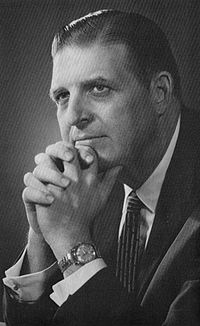
Redfern welcomes the “new old” evangelicals home

Charles Redfern rejoices “that the militancy is finally melting as it shrieks. I see hope. Evangelical Christianity can rid itself of civil religion, come back home, and become genuinely renewed.” It’s slow-going, and I’m often misunderstood, says this progressive evangelical, but there’s hope that evangelicals are leaving the religious right.

Here’s more:

My Democratic town committee questioned me on my pro-life stance before electing me; some in the Religious Right think people like me have made a pact with the Devil: we’re the enemy, veritable wolves. Others are just baffled. But confusion is inevitable in this era of shrieking, melting militancy. In fact, given the potential for a real homecoming and genuine renewal, confusion is good – as long as we laugh.

“Global reflex” at The Immanent Frame

Last week “The Immanent Frame” posted a provocative essay by Marcia Pally on “evangelicals who have left the right.” Since then a stream of scholars, activists, and observers have responded. My modest contribution, on the global dimension of evangelical politics, was posted today. Check it out here.

Carl Henry centennial

200px-CFHHenryIf Carl F.H. Henry hadn’t died in 2003, he would be turning 100 years old today. As I contend in Moral Minority, Henry inspired both conservatives and progressives toward social action. You wouldn’t know that based on Google Reader today. I’m only seeing establishment conservatives from the Gospel Coalition, like Justin Taylor, Russell Moore, and Al Mohler, honoring his memory.

Here’s an excerpt from Moral Minority’s first chapter, in which I describe Henry’s ambivalent response to the Chicago Declaration:

Henry’s response to the angst, flamboyant rhetoric, and specific policy prescriptions of his younger colleagues was understandably ambivalent. After all, he was an elder evangelical statesman presiding over the muted social conservatism of Christianity Today, the National Association of Evangelicals, the Evangelical Theological Society, and other institutions he had helped to establish. Henry was no longer an evangelical provocateur. Yet he admired their heightened social consciences, and he knew that he was partly responsible for setting in motion a trajectory away from principled passivism. A postwar wave of economic prosperity, rising social status, a new rhetoric of engagement, and a transformed eschatology—all elements epitomized and driven by movement-builder Carl Henry—had brought evangelicals to the brink of sustained political activism.

Henry’s path out of a fundamentalist exile took many directions. It led to Jerry Falwell, to James Dobson, and to a conspicuous politicization on the right. It also led to John Alexander, Jim Wallis, Mark Hatfield, Sharon Gallagher, and a movement of progressive evangelicals. The story of postwar evangelicalism, a politically contested and fluid movement, does not equal the prehistory of the Christian Right. In the 1970s the future of a newly heightened evangelical politics remained strikingly uncertain. Whether it went left or right was secondary to Henry’s more fundamental call for evangelicals to go public with their spiritual commitments.

Christian Century review

I was very pleased to get a Christian Century review of Moral Minority in the January 23, 2013, issue of Christian Century. In it Heath Carter of Valparaiso University offers probably one of the clearest synopses of the book I’ve yet seen. Here are a couple of excerpts:

In Moral Minority, David Swartz recovers the story of the unlikely coalition these progressive evangelicals forged in the 1960s and 1970s. The book unfolds as a series of engaging biographical sketches that offer a window into the diverse experiences and concerns animating the movement. . . .

Shifting seamlessly back and forth from the lives of such leading individuals to the wider relational and institutional networks within which they moved, Swartz persuasively shows that by the mid-1970s, though the evangelical left was undoubtedly a minority movement, it boasted surprisingly broad-based roots. It even packed an electoral punch, or so it seemed in 1976, when a groundswell of evangelical support helped a born-again Democrat by the name of Jimmy Carter to win the White House. At that moment there seemed no reason to question evangelicalism’s compatibility with progressive causes and candidates. . . .

Moral Minority infuses a welcome dose of suspense into the story of how American evangelicalism became a cornerstone of a resurgent modern conservatism. While historians have busied themselves in recent years searching for the origins of the Christian right in the 1930s, ’40s and ’50s, Swartz demonstrates that as late as the 1970s, evangelicals’ political allegiances remained fluid. He is careful—and right—to avoid giving the impression that born-again believers stood then at a fork in the road, as likely to veer left as right. But in calling attention to the contingencies, most notably those surrounding the vexed politics of abortion, he underscores that even on the eve of the Reagan revolution some alternative routes were possible.

We’re back!

After a long hiatus tending to my flu-stricken children and wife, my own bruised heart after a wrenching loss by Notre Dame, exam-grading, syllabi-prep, and a new course prep, we’re back in the saddle here at Moral Minority. Be looking for upcoming posts on recent reviews of the book (which shot up to an even more obscene price over the holidays), some discussion of the new Obama and evangelical push for immigration reform, and links to some of my recent writing.

Book signing

A couple of weeks ago, Joseph-Beth Booksellers hosted a book signing of Moral Minority. I gave a 15-minute talk, answered some great questions, and then signed books. About 40-50 friends, colleagues, family, and strangers were there. It was a great time!

DSC_7275j-web

DSC_7301j-web

DSC_7297j-web

DSC_7293j-web

DSC_7285j-web

DSC_7304j-web

What about the pietists?

Over at the Pietist Schoolman, Chris Gehrz wonders about the pietists in the evangelical left. Specifically, what about Chicago Declaration signers like Paul Rees, F. Burton Nelson, and other persons associated with the Evangelical Covenant Church? Could they have provided another case study of ethnic evangelicals–alongside Swiss-German Anabaptists, the Dutch Reformed, and two-thirds world evangelicals from around the world–who helped shape progressive evangelicalism?

Absolutely! In fact, I thought seriously about adding such chapter. Another related group with similar concerns would have been the Wesleyan holiness camp, with which Rees also related. Additions such as these, had there been more space and had I been a bit more attentive, could have helpfully fleshed out the ways in which practices of piety such as prayer and confession anchored the evangelical left’s social concern. Paul Rees’s 1973 address at the Thanksgiving Workshop in Chicago, which Chris describes, was one of the those moments.

Thanks for the thoughtful review of Moral Minority, Chris! I hope to meet you someday soon.

Want to give a gift made of nuclear weapons?

Hand_Hammered_Ir_4fdf64091fb53_180x180Still looking for a Christmas gift? A group called From War to Peace makes jewelry of copper recycled from disarmed nuclear weapon cables. If you use the coupon code “consistentlife” at the time of purchase, you get a 5% discount–and the organization Consistent Life gets 20% of the purchase price.