
Why Christians should be in the minority

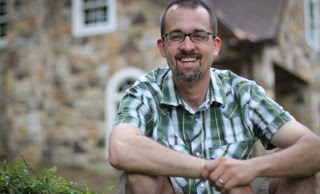
Shawn Smucker

In the context of a toxic political climate to which many Christians contribute, writer Shawn Smucker pens a compelling post on why Christians do better when they’re in the minority.

While overseas with World Vision, I traveled around with a group of Sri Lankan Christians. They are working in a country that is 80% Buddhist, 19% Hindu and Muslim, and less than 1% Christian. These Christians have learned how to operate as a huge minority, and let me tell you, it was a beautiful thing to see. They were humble beyond measure, kind to everyone they met, and thoughtful in their interactions with the other religions.

They were not bullies – they couldn’t be. They were not boisterous or pushy – they didn’t have that kind of power. They simply dwelt quietly amongst the poorest of the poor, bringing water and food and dignity and hope to anyone whose path they crossed. Wherever they showed up, whether it be at a Hindu celebration or a Buddhist temple or a mud hut, they were greeted with smiles and bows and appreciation.

They were known, everywhere they went, by their love. People sought out their prayers. Children knelt, touching their feet, awaiting their hands of blessing.

I saw they way they worked, and I thought to myself, I want to be in the minority.

Read more here.

The Peace Pastor

My friend Marty Troyer, also known as “The Peace Pastor,” runs a very popular and thoughtful blog at the Houston Chronicle’s website. As you can see from his list of posts below, he has eclectic interests. Go check him out here.

Empathizing with the other

I consistently tell my students to listen purposefully and carefully to those unlike themselves. If you usually read the New York Times, be sure also to read The American Conservative. If you usually read World magazine, be sure to also read Sojourners. In that spirit, evangelical progressive Jesse Curtis, one of the most thoughtful and prolific bloggers out there, is planning to listen and read only conservative sources for the next week. Subscribe to his blog to find out how his experiment in empathy goes!

Sean Gladding and narrative theology

Sean Gladding, who lives in an intentional community in the East End neighborhood of Lexington, is a good representation of progressive evangelical spirituality. Convinced that the old salvation formulation of the Romans Road is lacking in some fundamental ways, Gladding emphasizes Creation and the New Creation in his narrative of faith and Scripture. His book The Story of God, The Story of Us describes how Christians can experience a glimpse of God’s coming kingdom even here on earth. Click here (for a guest post at Kurt Willem’s site) to read Gladding’s description of his narrative style. And you can watch him speak below.

New Monasticism

Today Sean Gladding of a New Monastic community in Lexington named Communality spoke at Asbury’s chapel. It was a terrific talk and reminded of this book trailer. It highlights Jonathan Wilson Hartgrove’s translation of the Rule of St. Benedict and how it can be used in a contemporary urban environment.

Evangelical porn exposed

A couple of years ago, I considered doing some writing on kitsch like Thomas Kinkade paintings and Precious Moments dolls. I called it “evangelical porn” because of its exaggerated features and failure to resemble reality. This graphic makes me want to return to the project.

Dancing to the Beat of Shalom in Kansas City

A scene from “Underground”

In the early 1990s Jeremiah Enna and Mona Störling-Enna moved to Kansas City to join the arts scene. Twenty years later they now have over 800 students in their schools of dance and theater. They also launched The Culture House and Störling Dance Theater, which have come up with some impressive productions. Dismayed by the culture wars, the Ennas wrote Underground, according to Christianity Today, in order to bring about racial reconciliation in urban Kansas City. Arts critic Paul Horsley of the Kansas City Star named Underground one of the city’s Top 10 performances of the decade, calling it “one of the most vivid, heartfelt and theatrically astute pieces of dance theater ever to grace a Kansas City stage.” Read more about this fascinating evangelical story here.

Mike Clawson on the Mision Integral

Check out Mike Clawson’s just-published article on “Misión Integral and Progressive Evangelicalism: The Latin American Influence on the North American Emerging Church.” I had the privilege of meeting Mike unexpectedly at an archives a few weeks ago. We had a lot to talk about because his article touches on an important theme in one of Moral Minority’s chapters: “Samuel Escobar and the Global Reflex.” It’s about how engagement with the two-thirds world led some evangelicals toward an embrace of social justice. And his dissertation is on the emerging church movement. Mike, a grad student at Baylor, is doing some great work–keep an eye out for him. You can follow his blog here–and his wife’s terrific blog here (Julie is author of Everyday Justice: The Global Impact of Our Daily Choices).


Your Edible Garden in Lexington

Locals here in Lexington, Kentucky, should check out this talk being given at Your Edible Garden this Monday. Ryan Koch of Seedleaf will be talking about the spiritual components of community gardens and what it means to sow seeds in socio-economically diverse settings. Here are the details:


  • What: Your Edible Garden Series
  • When: Monday, August 27th, (6:30 potluck; 7pm discussion)
  • Where: Beaumont Presbyterian Church (1070 Lane Allen Road)

Evangelical left “plots” a peace summit

The photo accompanying today’s article entitled “Evangelical Left Plots D.C. Pacifist Summit”

Today the Institute for Religion and Democracy’s Mark Tooley denounced the upcoming “Evangelicals for Peace” gathering as “a gabfest uninterested in deep moral reflection and instead seeking the rhetorical satisfaction of denouncing violence and its ostensibly wicked advocates.” Evangelical progressives will likely respond that IRD ignores a long tradition of pacifism (especially pronounced in the early church) and a new and sophisticated literature on “just peacemaking.”

The tussle between the evangelical left and the IRD is long-standing. Here’s a short description in Moral Minority about an incident three decades ago:

In 1983 conservative activists repeatedly disrupted a conference on peacemaking at Fuller Theological Seminary. During a workshop on Central America, one protester shouted his objection to evangelical accommodation with Communist totalitarianism until delegates ushered him out of the room. Another protester berated the 1,700 delegates from a balcony during a plenary session. When the disturbance brought the proceedings to a halt, the audience sang the hymn “Amazing Grace” to drown him out. A display table manned by the Institute for Religion and Democracy urged delegates to sign a “research report” accusing Senator Mark Hatfield and Sojourners’ Jim Wallis of advocating Soviet-style communism. These scenes and what they represented—an increasingly vocal and activist right-wing coalition of Christians—appalled progressive evangelicals.